
Improve Your Posture and Strengthen Your Spine with Pilates
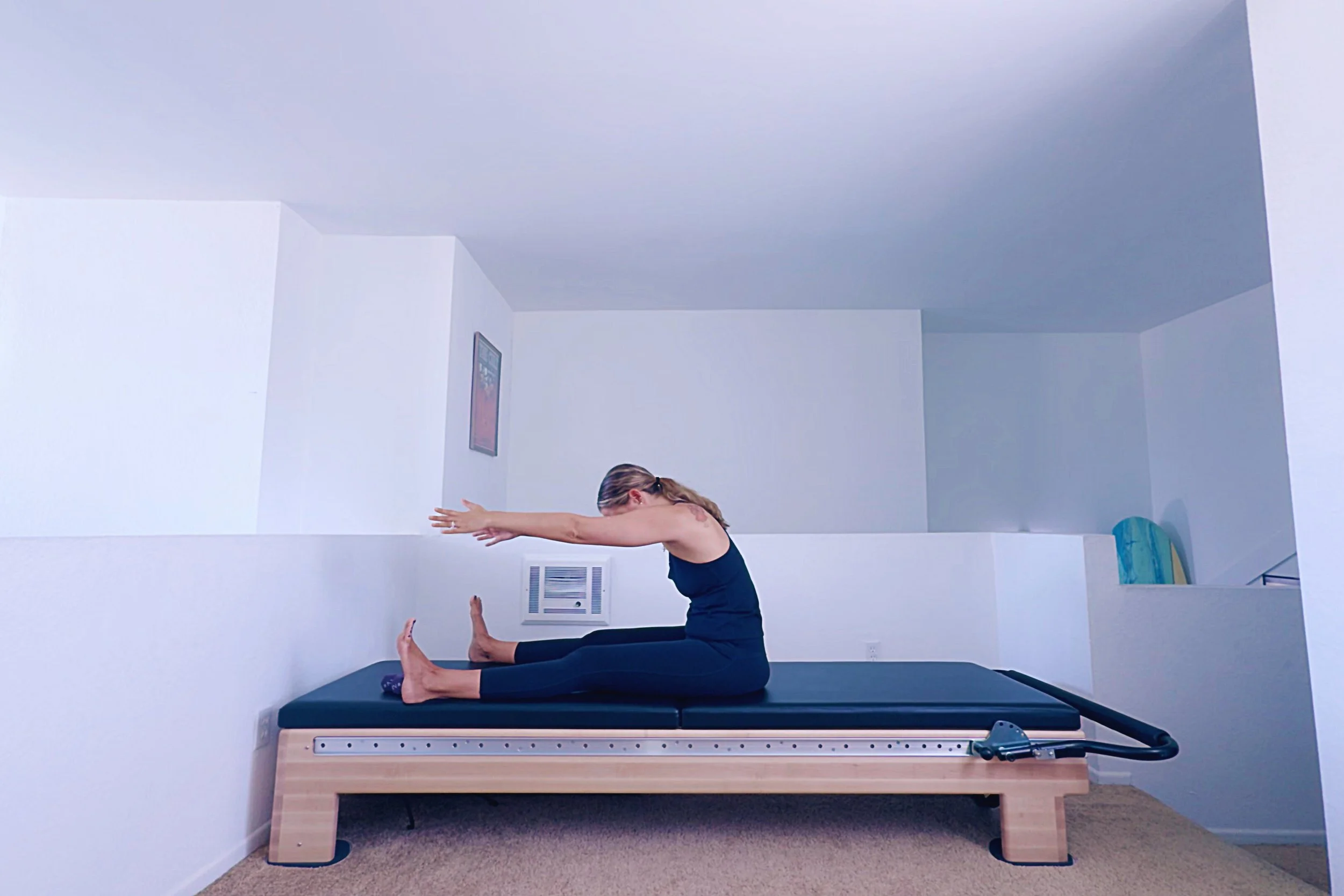
As a Pilates teacher, I've seen firsthand how back pain and poor posture have become increasingly common complaints. As we spend more time hunched over desks—whether in office or at home at the dining room table—or scrolling on our phones, our spines pay the price. Fortunately, Pilates offers a powerful solution for spine health, combining mindful movement with core strengthening to realign our bodies from the inside out.
Your Body's Natural Corset
Pilates focuses on controlled, precise movements that target the deep stabilizing muscles—the transverse abdominis, multifidi, and pelvic floor—that support your spine. These muscles act as your body's natural corset, supporting optimal spinal alignment and reducing strain on vertebral discs. Pilates exercises create balanced strength, preventing the muscular imbalances that often lead to chronic back pain and poor posture.
Moving Your Spine in Every Direction
Poor posture typically results from weak core muscles and tight hip flexors, and a consistent Pilates practice directly addresses these issues. The method emphasizes spinal articulation, teaching you to move each vertebra independently while maintaining a neutral spine position and moving the spine in all planes: flexion, extension, rotation, and lateral flexion.
Building Body Awareness
Beyond moving the spine in all planes, Pilates increases body awareness, helping you recognize when you're slouching and giving you the muscular strength to self-correct. Over time, proper alignment becomes second nature, reducing the forward head posture and rounded shoulders all too common in today's digital world.
Benefits Beyond Your Workout
The postural improvements from Pilates extend far beyond the studio. Practitioners often report reduced lower back pain, increased flexibility, and improved breathing capacity—you can thank optimal spinal alignment for that. The mind-body connection fostered in Pilates also helps reduce tension and stress, which commonly manifest as tightness in the neck and upper back.
Get Started Today
Whether you choose mat Pilates or reformer-based sessions, consistency is key. If you're ready to start moving, drop me a note and we can schedule a 1:1 session. If you prefer to work out on your own, join the waitlist for Rizzo On-Demand, launching in January.